
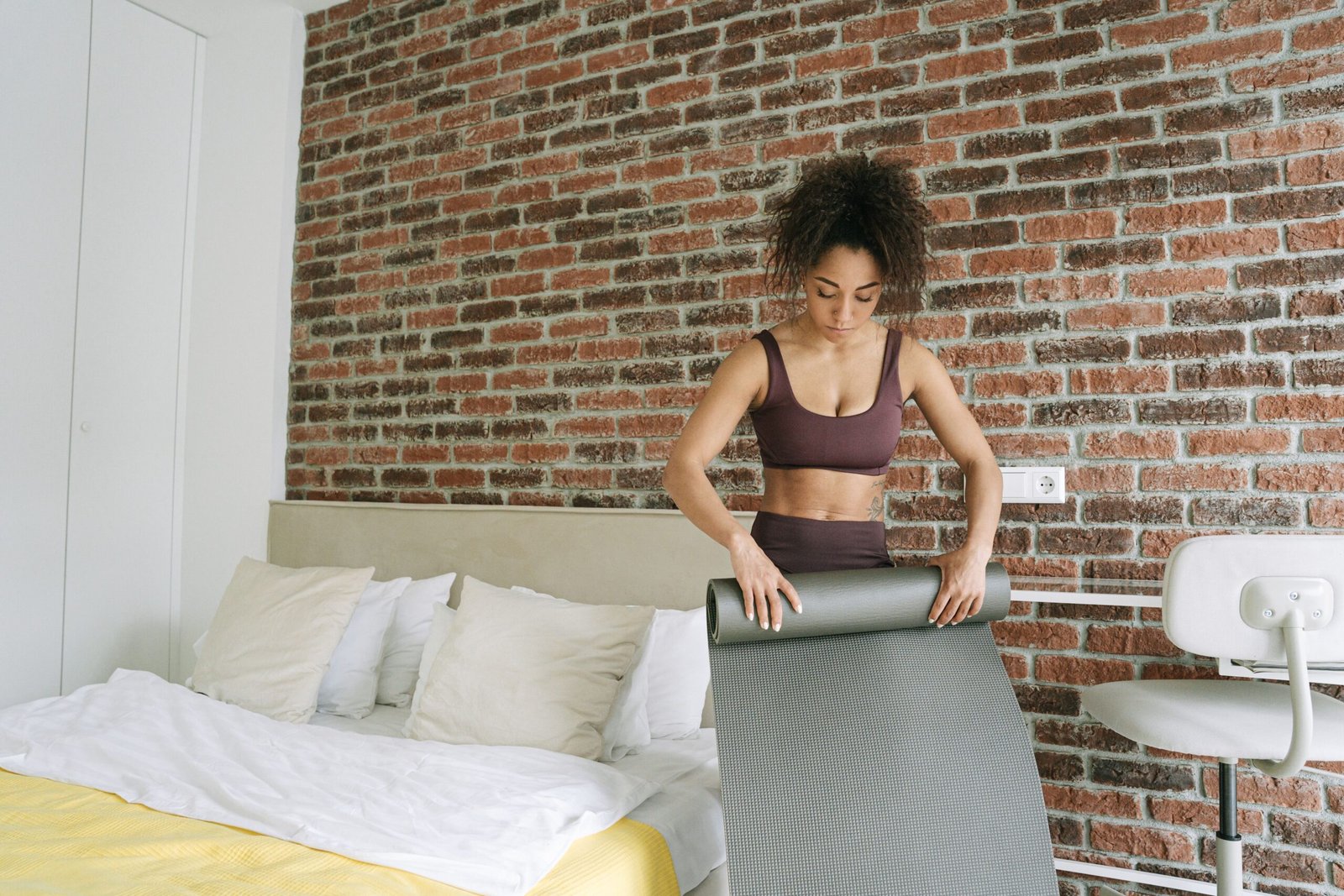
Living in an apartment, a studio, or a room with barely enough floor space for a yoga mat doesn’t mean you have to skip strength training. It means you need equipment chosen for one specific job: working hard and disappearing completely when you’re done.
This is a small space home gym built entirely around that constraint — nothing here needs a dedicated room, a drilled-in rack, or a landlord’s permission. Every pick either folds flat, hangs on a door, or fits in a closet shelf, and the whole list comes in well under $400.
If you already read our beginner home gym equipment guide, this post goes narrower and deeper on the specific problem of not having room — a few picks here are genuinely new categories, and a couple of our previous favorites make a return because they happen to be exactly what small-space training needs anyway.
Quick Comparison — Small Space Home Gym Equipment
| Product | Best For | Price (approx.) | Our Rating |
|---|---|---|---|
| RitFit Bodyweight Resistance Trainer | Full-body strength, zero floor space | $35–$45 | 4.4/5 |
| Titan Fitness 10–40 LB Adjustable Kettlebell | Space-saving weight training | $145–$160 | 4.5/5 |
| ProsourceFit Tri-Fold Exercise Mat | Fold-flat floor work | $40–$55 | 4.6/5 |
| Yamazaki Tower Over-the-Door Fitness Hanger | Storing everything else | $30–$45 | 4.3/5 |
| DEGOL Ball-Bearing Jump Rope | Zero-footprint cardio | $8–$12 | 4.4/5 |
Prices change often — always check the current price before buying.
Our Top Picks: Small Space Home Gym Equipment
RitFit Bodyweight Resistance Trainer — best for full-body strength in zero floor space
A suspension trainer is the single most space-efficient strength tool that exists: two straps, a door anchor, and you have access to rows, presses, lunges, and core work that would otherwise need a full rack of equipment. This kit includes both a door anchor and an overhead anchor, so it works whether you’re training in a bedroom or under a sturdy beam.
Why we recommend it: For genuinely tight spaces, this replaces an entire corner of dumbbells and a bench with something that packs into a bag the size of a water bottle. Research on short-term suspension training has shown measurable strength and power gains from consistent use — it’s a legitimate training tool, not a gimmick.
Pros:
-
- Packs into almost no storage space
-
- Includes both door and overhead anchor options
-
- Full-body — not limited to one muscle group like most compact tools
Cons:
-
- Requires a genuinely solid anchor point (door frame or beam) — not safe on a hollow or flimsy door
-
- Less intuitive for absolute beginners than a dumbbell
-
- Handles are basic compared to premium suspension trainers
Titan Fitness 10–40 LB Adjustable Kettlebell — best space-saving weight training
One adjustable kettlebell that scales from 10 to 40 lbs replaces what would otherwise be four or five separate kettlebells taking up floor space. For small-space training, that’s the entire point of “adjustable” equipment — it’s not really about convenience, it’s about not needing a rack at all.
Why we recommend it: If you already read our beginner guide, you’ll recognize this logic from the adjustable dumbbells we recommended there — same principle, applied to kettlebell training specifically. One footprint, a full range of working weights.
Pros:
-
- Replaces multiple fixed kettlebells in one compact unit
-
- Beginner-friendly weight range for swings, goblet squats, and presses
-
- No rack or shelving needed — stores in a closet corner
Cons:
-
- Maxes out at 40 lbs, which more advanced lifters will outgrow
-
- Pricier upfront than a single fixed kettlebell
-
- Adjustment mechanism adds a small amount of bulk to the handle
ProsourceFit Tri-Fold Exercise Mat — best for fold-flat floor work
Most mats are designed to be rolled, which is fine until you’re trying to wedge a rolled mat into a closet that’s already full. This one folds into thirds instead, so it stores flat — behind a door, under a bed, or on top of a shelf — instead of taking up a rolling-pin-shaped chunk of space.
Why we recommend it: At 1.5 inches thick, it’s substantially more cushioned than a typical rolled yoga mat, which matters more in a small space where the floor is doing double duty as your only workout surface (no dedicated gym flooring).
Pros:
-
- Folds flat for storage instead of rolling
-
- Thicker cushioning than most compact mats — better for joints on a hard floor
-
- Comes with carrying handles built into the fold
Cons:
-
- Heavier than ultra-packable travel mats (about 5 lbs)
-
- 24-inch width feels narrow for taller users
-
- New-mat smell for the first few days
Yamazaki Tower Over-the-Door Fitness Equipment Hanger — best for storing everything else
This is the piece most small-space guides skip, and it’s arguably the most useful one: a slim, no-drill rack that hangs over any standard door and gives your resistance bands, jump rope, and folded mat an actual home instead of a pile in the corner.
Why we recommend it: Storage is usually the real reason a small-space home gym setup falls apart within a month — not lack of motivation, just clutter. A dedicated, no-installation spot for your gear removes that friction entirely, and it’s fully renter-friendly since nothing gets drilled or mounted.
Pros:
-
- No drilling — hangs directly over a standard door
-
- Keeps gear visible and easy to grab, which helps consistency
-
- Slim profile doesn’t block the door from closing
Cons:
-
- Modest weight capacity — not meant for heavy equipment
-
- Only fits standard-sized doors
-
- Steel construction shows fingerprints/marks over time
DEGOL Ball-Bearing Jump Rope — best zero-footprint cardio
A jump rope takes up less space than a phone charger and delivers a genuinely demanding cardio workout in a 10-foot-by-10-foot patch of floor — which describes most small apartments’ available space exactly.
Why we recommend it: The ball-bearing rotation system means it doesn’t tangle or catch the way cheap ropes do, and the cable length adjusts, so it actually fits your height instead of the one-size-fits-most ropes that trip up beginners unnecessarily.
Pros:
-
- Genuinely takes up almost zero storage space
-
- Smooth ball-bearing rotation — fewer tangles for beginners
-
- Adjustable cable length, with excess tucked into the handles
Cons:
-
- Handles feel slightly thick for smaller hands
-
- No carrying case included
-
- Requires a bit of ceiling clearance and non-carpeted floor to use comfortably
What to Look for When Buying Small Space Home Gym Equipment
1. Fold-flat or hang, not just “compact.” A lot of equipment is marketed as space-saving while still needing a dedicated corner. The real test: can it go behind a door, on a shelf, or in a closet when you’re not using it? If not, it’s not actually a small-space solution.
2. No permanent installation, if you rent. Anything that needs drilling — a wall-mounted pull-up bar, a bolted rack — is a bigger commitment than most renters want. Doorway and over-the-door equipment gets you almost all the same functionality without touching the walls.
3. Check the actual door frame or anchor point before buying. Suspension trainers and doorway bars both depend entirely on a solid anchor. Measure your door frame width and check whether your door opens the right direction before ordering — this is the single most common return reason for this category of equipment.
4. One adjustable tool beats several fixed ones. This matters even more in a small space than in a garage gym — every fixed-weight kettlebell or dumbbell you own is floor space you don’t get back. Adjustable versions cost more upfront but consolidate your entire weight range into one object.
5. Plan for storage before you buy, not after. A small space home gym succeeds or fails on whether the equipment has an actual home when it’s not in use. If you can’t picture exactly where each item lives, budget for the over-door hanger or a slim storage bin before you budget for anything else.
Frequently Asked Questions
Can you build a real home gym in a small apartment? Yes — the equipment above covers strength (suspension trainer, adjustable kettlebell), cardio (jump rope), and floor work (fold-flat mat) in a footprint that stores in a single closet shelf when you’re done.
Is a suspension trainer as effective as dumbbells? For a beginner, yes, for building general strength — research on suspension training shows real strength and power improvements from consistent use. It won’t fully replace heavy progressive weight training long-term, but it’s more than enough to start.
What if I don’t have a door I can use for equipment? A freestanding option is worth considering, but most standard interior doors (opening toward you, in good condition) work fine for both suspension trainers and doorway bars. Check the manufacturer’s frame-width and weight requirements before buying.
Do I need to spend close to $400 to get started? No — the jump rope and mat alone cover cardio and floor work for under $60. The suspension trainer and kettlebell are upgrades you can add once you know you’ll stick with training at home.
Should I get this small-space setup instead of the beginner equipment in your other guide? Not necessarily instead — often alongside. If you have even a little more room, the adjustable dumbbells and doorway pull-up bar from our beginner guide are also genuinely small-space-friendly and pair well with the picks here.
Final Thoughts
A small space isn’t a real obstacle to home training — it’s just a different set of constraints, and the equipment above is built entirely around them. Nothing here needs a dedicated room, and everything has an actual place to live when you’re not using it, which turns out to be the real reason most home gym plans fail.
Start with the mat and jump rope if the full list feels like a lot — that’s under $60 and covers cardio and floor work completely. Add the suspension trainer and kettlebell once you know this is a habit that’s sticking.

Pingback: Calisthenics Equipment for Beginners - fithearth
Pingback: Best Yoga Mats for Home Practice - fithearth
Pingback: Aesthetic Home Gym Ideas on a Budget - fithearth
Pingback: Home Gym Organization Ideas That Actually Work - FitHearth