
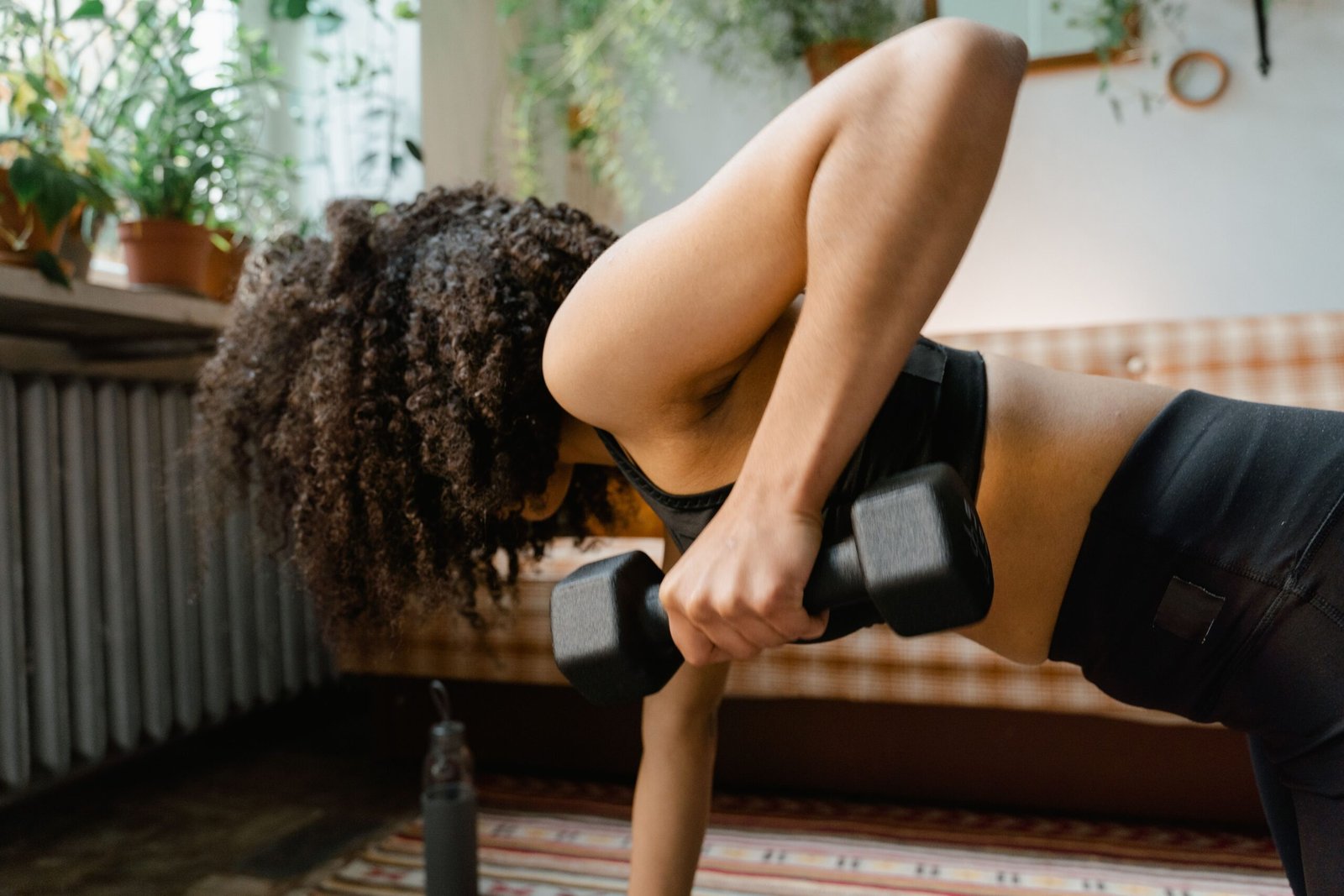
Adjustable dumbbells all make the same promise: one pair replaces a whole rack. But “adjustable” covers wildly different products — a $70 spin-lock set and an $800 dial-turn pair are both technically adjustable dumbbells, and which one is right for you depends entirely on your budget, your space, and how heavy you actually plan to lift.
We compared the mechanisms, weight ranges, and real owner feedback across five genuinely different adjustable dumbbell systems — from true beginner budgets to the quiet, traditional-feel sets serious lifters pay a premium for — so you can find the best adjustable dumbbells for home workouts based on what actually matters for your situation, not just whichever one has the most ads.
If you read our beginner home gym equipment guide, you’ve already met the Bowflex SelectTech 552 — a genuinely solid all-rounder. This guide goes deeper: is it still the right call, or does your specific situation point somewhere else?
Quick Comparison — Best Adjustable Dumbbells
| Product | Best For | Price (approx.) | Our Rating |
|---|---|---|---|
| PowerBlock Elite Series | Best overall value | $380–$420/pair | 4.7/5 |
| NÜOBELL Adjustable Dumbbells | Quietest, most traditional feel | $700–$800/pair | 4.7/5 |
| FLYBIRD Adjustable Dumbbells | Best for true beginners | $130–$180/pair | 4.4/5 |
| Ironmaster Quick-Lock Dumbbells | Best heavy-duty / expandable | $900–$1,000/pair | 4.6/5 |
| CAP Barbell Adjustable Dumbbell Set | Best ultra-budget option | $60–$90/pair | 4.1/5 |
Prices change often — always check the current price before buying.
Our Top Picks: Best Adjustable Dumbbells
PowerBlock Elite Series — best overall value
PowerBlock’s stacked-block design looks unlike a traditional dumbbell, but that shape is the whole point: it’s what lets the weight change happen in seconds without a bulky mechanism, and it’s what makes these stack compactly instead of sprawling across the floor. The Elite Series covers 5–50 lbs per hand out of the box, with expansion kits available if you outgrow that range.
Why we recommend it: This is the adjustable dumbbell we’d point most beginners toward if budget isn’t the very first constraint. It’s durable enough that people genuinely use the same pair for years, the weight changes are fast enough that you won’t break your workout rhythm, and the price sits well below the premium dial-turn systems without feeling like a compromise.
Pros:
- Strong price-to-durability ratio
- Fast, simple weight changes in 2.5-lb increments
- Compact rectangular footprint compared to round dumbbell heads
Cons:
- Boxy shape feels less natural than a traditional dumbbell to some lifters
- Base weight range tops out at 50 lbs — expansion kits cost extra
- Not as visually “gym-like” if that matters to you
NÜOBELL Adjustable Dumbbells — best for a quiet, traditional feel
NÜOBELL dumbbells are the closest an adjustable set gets to feeling like a real fixed dumbbell: solid, evenly balanced, and — unlike most dial systems — genuinely quiet, with no rattling plates when you move. That matters more than it sounds like it would if you’re training in an apartment, a shared house, or anywhere near a sleeping baby.
Why we recommend it: This is a premium pick, and the price reflects it. But for someone who’s already decided home training is a long-term habit and wants equipment that never feels like a compromise, the traditional dumbbell shape and quiet mechanism are worth the jump from the budget tier.
Pros:
- Genuinely quiet — no plate rattle during reps
- Traditional dumbbell shape and balance, not a boxy alternative
- Smooth, fast dial adjustment
Cons:
- Significantly more expensive than PowerBlock or Bowflex
- Weight range (5–80 lbs) is more than most beginners need
- Bulkier to store than block-style systems
FLYBIRD Adjustable Dumbbells — best for true beginners
FLYBIRD’s dial system is built around one goal: making weight changes so obvious that a first-time lifter can’t get it wrong. The dumbbells keep a more traditional shape than PowerBlock’s stacked design, which tends to feel more familiar if you’ve used gym dumbbells before, and — unlike most adjustable sets — you can buy a single dumbbell instead of committing to a pair right away.
Why we recommend it: For someone who isn’t sure yet whether home strength training is going to stick, this is a lower-commitment way to find out. The mechanism is simple enough to hand to a total beginner without an explanation, and the option to start with one dumbbell (for single-arm work) or a lighter weight range keeps the upfront cost down.
Pros:
- Genuinely beginner-friendly dial mechanism
- Can be purchased individually, not just in pairs
- Traditional dumbbell shape and grip
Cons:
- Lower maximum weight than PowerBlock or NÜOBELL — you may outgrow it
- Build quality feels less premium at this price point
- Fewer long-term reviews than more established brands
Ironmaster Quick-Lock Adjustable Dumbbells — best heavy-duty / expandable pick
Ironmaster takes a different approach: an actual locking pin system on a traditional dumbbell handle, expandable well past what any dial system offers — up to 165 lbs per hand with additional plate kits. It’s the pick for someone who can already see themselves needing more weight than a typical adjustable set provides.
Why we recommend it: Most beginners won’t need this much headroom, but if you’re setting up equipment you expect to still be using in five years — including as your strength genuinely increases past what other systems max out at — this is the adjustable dumbbell built to grow with you instead of being replaced.
Pros:
- Expandable well beyond what dial systems offer (up to 165 lbs/hand)
- Traditional dumbbell shape, flat ends prevent rolling
- Metal locking-pin mechanism is extremely durable
Cons:
- Highest price on this list
- Changing weights takes longer than a dial system
- Overkill for someone training purely for general fitness
CAP Barbell Adjustable Dumbbell Set — best ultra-budget pick
This is the other end of the spectrum from everything above: a classic spin-lock design, where you slide weight plates onto a bar and secure them with a screw collar. It’s the same basic idea dumbbells have used for decades, and it’s dramatically cheaper than any dial or locking-pin system.
Why we recommend it: If you’re not sure home training is for you yet, or the budget for this category is genuinely under $100, this gets you real, functional adjustable weight instead of no weight at all. It’s not going to feel as polished as the picks above, but it works, and plenty of people train seriously with exactly this style of dumbbell for years.
Pros:
- By far the lowest cost of entry
- Simple, well-understood mechanism with no electronics or dials to break
- Individual plates mean very granular weight control
Cons:
- Slowest to adjust — screwing collars on and off between sets
- Screw collars can loosen over time and need occasional tightening
- Bulkier and less refined than the picks above
What to Look for When Buying Adjustable Dumbbells
1. Buy for the weight range you’ll actually reach, not the one you have now. Progressive overload — gradually increasing the weight or reps over time — is what makes strength training work, so a beginner range today doesn’t mean you’ll stay there. Leave yourself room to grow rather than buying exactly to your current max.
2. The adjustment mechanism is a real trade-off, not just a preference. Dial systems (PowerBlock, NÜOBELL, FLYBIRD) are fast but cost more. Locking-pin and spin-lock systems (Ironmaster, CAP Barbell) are slower between sets but tend to be more durable or more affordable at the extremes. Think about how often you’ll actually be changing weight mid-workout.
3. Noise and floor impact matter more than most buying guides mention. If you’re in an apartment or training near people sleeping, a rattly dial system or dropped plates can be a real problem — this is where NÜOBELL’s quiet mechanism earns its price premium, and it’s worth testing reviews specifically for noise complaints before buying.
4. Check the footprint, not just the weight range. Block-style systems (PowerBlock) tend to store more compactly than traditional-shaped adjustable dumbbells of the same weight range. If storage space is tight, this can matter as much as price.
5. Don’t assume more expensive means more durable. Some premium dial systems are also the most repair-prone if the internal mechanism fails, while a basic spin-lock set has almost nothing to break. Read reviews for long-term reliability, not just first-impression build quality.
Frequently Asked Questions
What’s the best adjustable dumbbell weight range for a beginner? Most beginners are well covered by a 5–50 lb per-hand range. Go higher only if you’re already comfortable lifting heavier, or if you specifically want equipment that won’t need replacing as you get stronger.
Should I just get the Bowflex SelectTech 552 instead? It’s a genuinely good, affordable option — we cover it in our beginner home gym equipment guide — and if you want a well-reviewed dial system at a moderate price, it’s still a reasonable choice. The picks above exist because “best” depends on your priorities: PowerBlock if you want a bit more durability for a similar price, FLYBIRD if you want to start even cheaper, or NÜOBELL/Ironmaster if you’re planning to outgrow the beginner range.
Are dial-adjustable dumbbells safe to drop? No — none of the dial systems on this list (PowerBlock, NÜOBELL, FLYBIRD) are built to be dropped, and doing so can damage the internal mechanism. If you train with movements where dropping the weight is likely, a basic spin-lock or fixed dumbbell is the safer choice.
Do I need a stand for adjustable dumbbells? Not strictly, but it helps. Most dial systems are designed to be picked up and set down flat on their base, and a stand keeps them at a consistent height and off the floor. It’s a reasonable add-on, not a requirement to get started.
How much should I expect to spend on a genuinely good adjustable dumbbell set? Budget $130–$450 for a set that will comfortably serve most beginner-to-intermediate lifters for years. Below that, you’re trading speed and durability for price (like the CAP Barbell pick); above it, you’re paying for quieter operation, higher max weight, or premium build quality.
Final Thoughts
There isn’t a single “best” adjustable dumbbell — there’s a best one for your budget, your space, and how heavy you actually plan to go. If you want the strongest all-around case for most people, the PowerBlock Elite Series is our pick. If noise matters because of where you train, NÜOBELL is worth the premium. And if you just want to find out whether home strength training sticks before spending much, FLYBIRD or the CAP Barbell set both get you real, functional weight without a big commitment.
Whichever you choose, the equipment matters less than showing up consistently — pick the one that removes friction for your specific situation, and let progressive overload do the rest.


Pingback: Home Gym Setup for Under $150 - FitHearth