
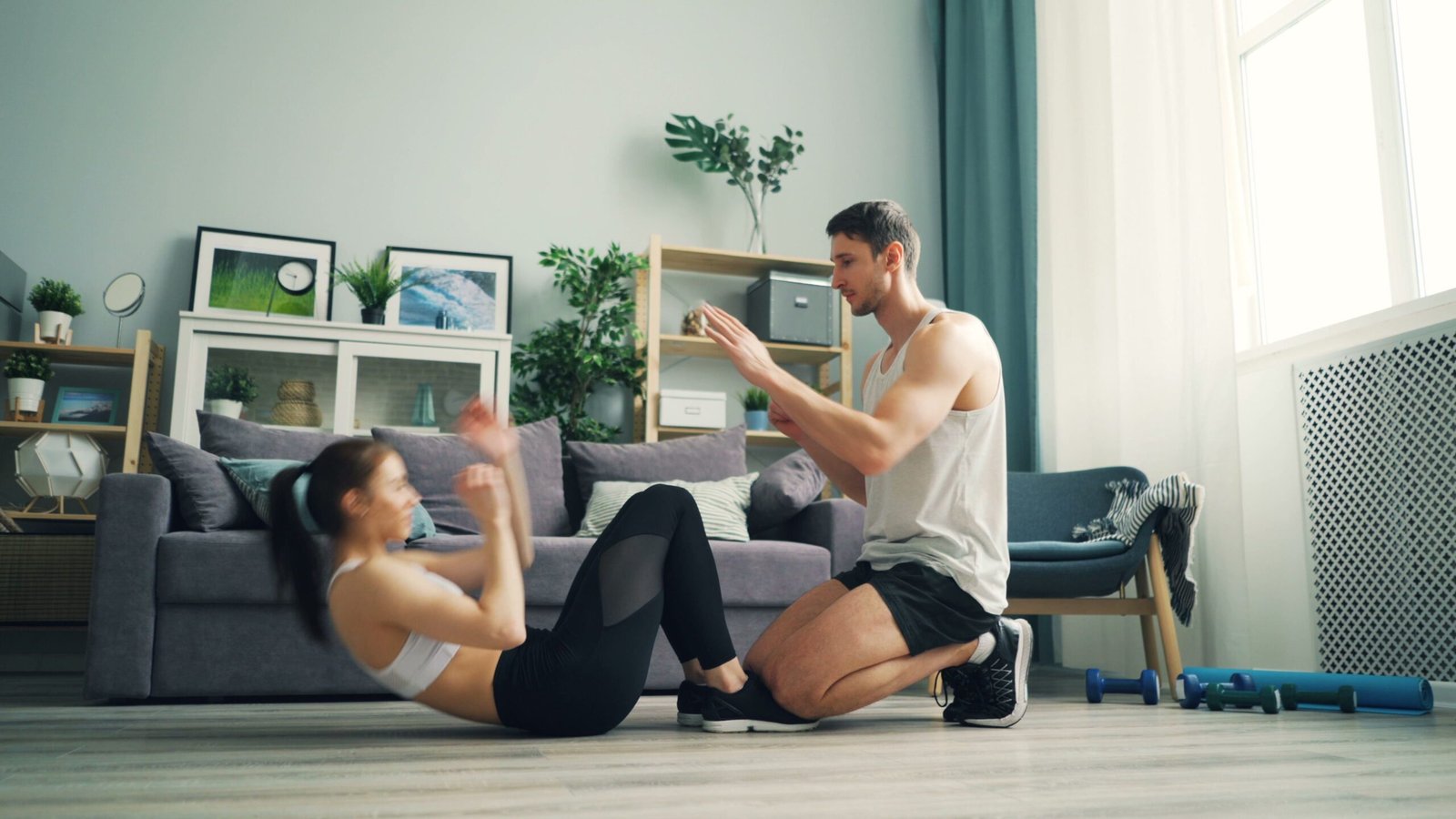
Starting a home gym can feel overwhelming the moment you open a fitness retailer’s website — there are hundreds of machines, gadgets, and “essential” tools competing for your money. The truth is, you need far less than the ads suggest.
This guide covers the best home gym equipment for beginners: five pieces that are affordable, take up little space, and cover strength, cardio, and mobility without requiring a garage conversion. If you’re setting up your first home gym on a budget, start here.
The CDC recommends that adults do muscle-strengthening activities at least twice a week — and having the right equipment at home is what actually makes that realistic on a busy week.
We’ve based these picks on hands-on reviews from trusted fitness-equipment testers (linked throughout), cross-checked against what actually makes sense for someone just starting out — not competitive lifters.
Quick Comparison — Best Home Gym Equipment for Beginners
| Product | Best For | Price (approx.) | Our Rating |
|---|---|---|---|
| Bowflex SelectTech 552 Adjustable Dumbbells | Overall strength training | $330–$430 | 4.7/5 |
| Amazon Basics Cast Iron Kettlebell | Budget kettlebell training | $35–$50 | 4.3/5 |
| Fit Simplify Resistance Loop Bands (5-pack) | Small spaces & travel | $15–$20 | 4.4/5 |
| Gaiam Essentials Yoga Mat | Stretching, core & floor work | $20–$30 | 4.4/5 |
| Iron Gym Total Upper Body Workout Bar | Bodyweight training | $25–$35 |
Prices change often — always check the current price before buying.
Our Top Picks: Best Home Gym Equipment for Beginners
Bowflex SelectTech 552 Adjustable Dumbbells — best for overall strength training
One pair of these replaces up to 15 sets of traditional dumbbells (5 to 52.5 lbs each), which matters a lot when you don’t have a spare room to dedicate to weight racks. A turn of the dial changes the weight in seconds, so you’re not digging through a pile of hex dumbbells mid-workout.
Why we recommend them: For a beginner, the biggest risk isn’t lifting too heavy — it’s getting bored or plateauing because your equipment doesn’t grow with you. These adjust in small enough increments (2.5 lbs at the lighter end) that you can progress gradually instead of jumping from “too easy” to “too hard.”
Pros:
-
- Replaces a full dumbbell rack in the space of one pair
-
- Fast, one-hand weight changes
-
- Increments are gentle enough for true beginners
Cons:
-
- Bulkier than a fixed dumbbell at any single weight
-
- Not built to be dropped
-
- Higher upfront cost than a basic dumbbell set
Amazon Basics Cast Iron Kettlebell — best budget kettlebell
Kettlebells are one of the most efficient tools for a beginner because a single movement — the kettlebell swing — trains your hips, glutes, back, and cardiovascular system at once. This one keeps the cost of entry low without cutting corners on the basics.
Why we recommend it: You don’t need a premium powder-coated kettlebell to learn proper form. This is a straightforward, well-reviewed option to figure out whether kettlebell training is something you’ll stick with before spending more.
Pros:
-
- Very low price for the weight
-
- Wide range of sizes available to size up over time
-
- Simple, no-frills design
Cons:
-
- Painted finish can wear or rust if kept somewhere humid
-
- Handle can feel slightly slippery without chalk
-
- Fewer weight-increment options than premium brands
Fit Simplify Resistance Loop Bands (5-Pack) — best for small spaces & travel
Five bands, five resistance levels, one small bag. These are the easiest way to add real resistance training to a home gym that doubles as a living room, and they’re light enough to toss in a suitcase.
Why we recommend them: Beginners often assume bands are a “lesser” version of weights — they’re not. They add resistance through a full range of motion and are genuinely useful for warming up, activating muscles before a lift, or training on days you don’t want to touch dumbbells at all.
Pros:
-
- Extremely affordable entry point
-
- Five resistance levels cover most beginner exercises
-
- Takes up almost no storage space
Cons:
-
- Latex material can degrade over time with heavy use
-
- No printed weight-equivalent, just color-coded levels
-
- Not a full replacement for heavier strength training long-term
Gaiam Essentials Yoga Mat — best all-purpose mat
Every home gym needs a dedicated patch of floor, and this mat is the reason your stretching, core work, and floor exercises don’t happen directly on hardwood or carpet. It’s reversible, comes in enough colors to actually enjoy looking at, and won’t demand a big chunk of your budget.
Why we recommend it: This isn’t the mat we’d hand a serious yoga practitioner, but for general home-gym use — planks, stretching, floor-based strength work — it’s comfortable, grippy enough, and priced so you won’t be precious about it getting sweaty or dusty.
Pros:
-
- Genuinely affordable
-
- Reversible with a sticky top layer for grip
-
- Wide color selection
Cons:
-
- Shorter than some standard mats — tall users may want to size up
-
- Can carry a noticeable smell out of the packaging at first
-
- Thinner than premium mats, so less cushioning on hard floors
Iron Gym Total Upper Body Workout Bar — best for bodyweight training
This doorway bar installs without drilling and gives you pull-ups, chin-ups, push-ups, and sit-up support in one piece of equipment — arguably the best strength-to-cost ratio of anything on this list.
Why we recommend it: Bodyweight training is one of the most beginner-friendly ways to build real strength, and this bar removes the only real barrier (needing a rack or a park nearby). It’s also one of the few items here that a complete beginner and a much more advanced lifter can both use.
Pros:
-
- No drilling or permanent installation required
-
- Extremely affordable for what it enables
-
- Doubles as support for push-ups and sit-ups
Cons:
-
- Requires a doorway with suitable frame dimensions
-
- Less stable than a wall-mounted or freestanding bar
-
- Not rated for heavier loaded pull-up training
What to Look for When Buying Home Gym Equipment for Beginners
1. Space before anything else. Measure the actual area you’ll train in before buying anything. A lot of first-time buyers pick equipment based on what looks impressive online, then discover it doesn’t fit anywhere they’ll actually use it.
2. Adjustability over quantity. One adjustable tool (like the SelectTech dumbbells above) usually beats five fixed pieces, both for cost and for storage. As a beginner, your strength will change quickly in the first few months — buy equipment that can keep up.
3. Noise and floor impact. If you’re in an apartment or share walls, factor in how loud and floor-impactful each piece is. Kettlebell swings and dropped dumbbells are common sources of noise complaints — a mat under your equipment helps on both fronts.
4. Don’t buy for the workout you wish you did. Buy for the one you’ll actually do three times a week. A rowing machine is a fantastic tool, but if you know you prefer bodyweight and free-weight training, it’ll become an expensive clothes rack.
5. Price per use, not price tag. A $30 mat you use daily for a year is cheaper, per use, than a $300 gadget that sits untouched after week two. Start with the essentials on this list and add specialty equipment only once you know your training style.
Frequently Asked Questions
How much does a beginner home gym cost? A functional beginner setup — the five items above — typically runs $400–$550 total. You can trim that further by starting with just a mat, bands, and one kettlebell for well under $100.
What equipment do I really need to start? At minimum: something for resistance (bands, a kettlebell, or dumbbells), a mat for floor work, and comfortable space to move. That’s really the core of the best home gym equipment for beginners — everything else is an upgrade, not a requirement.
Is a pull-up bar worth it for beginners? Yes, if your doorway fits one. It’s one of the cheapest ways to train your entire upper body, and most beginners can start with assisted or negative reps even before they can do a full pull-up.
Should I buy adjustable or fixed dumbbells first? Adjustable, in almost all cases. Fixed dumbbells are cheaper per pound, but you’ll outgrow a single pair within weeks — adjustable sets save money and space over time.
Do I need a yoga mat if I’m not doing yoga? Yes — it’s less about yoga and more about giving yourself a dedicated, cushioned, non-slip surface for stretching, core work, and floor exercises.
Final Thoughts
You don’t need a garage full of equipment to start training seriously at home — you need a handful of versatile tools and the consistency to use them. In our view, the five picks above are the best home gym equipment for beginners: they cover strength, cardio, and mobility for well under what a single year of a gym membership would cost, and every one of them fits in a closet when you’re done.
Start with one or two pieces if the full list feels like a lot at once — a mat and a set of resistance bands is a completely legitimate way to begin. You can build from there.
Pingback: Build a Better Small Space Home Gym - fithearth
Pingback: Best Adjustable Dumbbells for Home Workouts - fithearth
Pingback: Calisthenics Equipment for Beginners - fithearth