
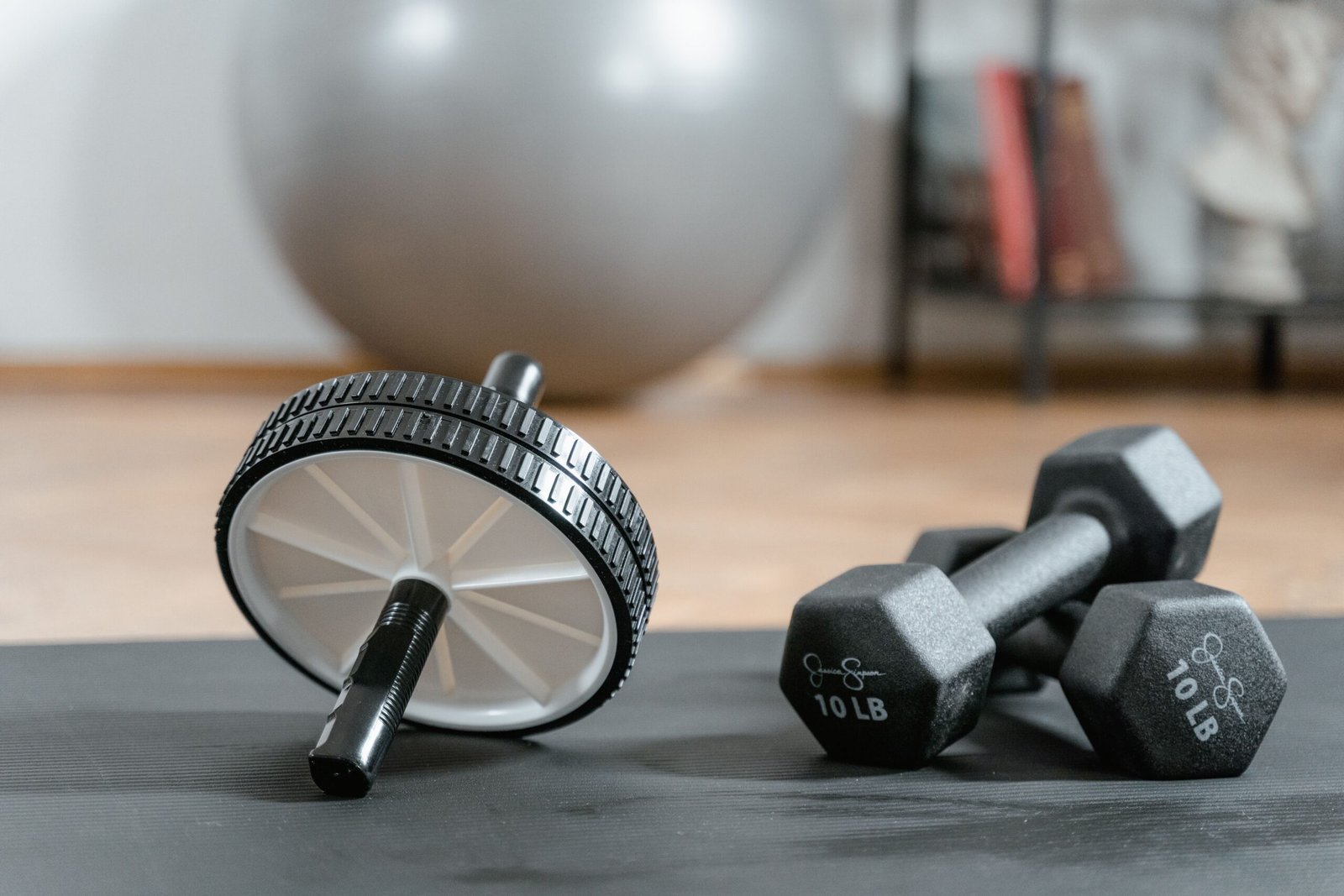
Trying to build a home gym for the first time usually means fifty open browser tabs, a dozen conflicting “must-have” lists, and no idea where to actually stop spending. This guide skips that entirely: it’s one exact home gym setup under $150, covering strength, cardio, and flexibility, with real prices that add up to a number you can check against your own budget.
This is for beginners who want to start working out at home without guessing, overbuying, or waiting for a “someday” gym membership. Every item below earns its spot — nothing here is filler just to pad out a list.
For context on why this matters financially: the average U.S. gym membership costs about $50 a month, or roughly $600 a year, once joining fees and renewals are factored in (Strong Home Gym, 2026). This entire home gym setup costs less than three months of that — and you keep the equipment.
Quick Comparison — Home Gym Setup for Under $150
| Product | Best For | Price (approx.) | Rating |
|---|---|---|---|
| Amazon Basics Neoprene Dumbbell Pair (5 lb) | Basic strength training | ~$18 | 4.4/5 |
| Amazon Basics Resistance Band Set (5 bands) | Variable resistance, travel-friendly | ~$22 | 4.4/5 |
| Gaiam Print Yoga Mat | Floor work, stretching, yoga | ~$20 | 4.6/5 |
| Amazon Basics Jump Rope (adjustable) | Cardio | ~$10 | 4.4/5 |
| Yes4All Vinyl Kettlebell (10 lb) | Functional, full-body strength | ~$25 | 4.6/5 |
| MyGift Rustic Wall Organizer Rack | Keeping everything off the floor | ~$21 | 4.5/5 |
| Total | ~$116 |
That leaves roughly $34 of your $150 budget for tax, shipping, or a small extra like a second dumbbell weight down the line.
Our Top Picks for a Budget Home Gym Setup
Amazon Basics Neoprene Dumbbell Pair (5 lb) — Basic Strength Training
A single pair of 5 lb neoprene-coated dumbbells is the most flexible starting weight for beginners — light enough for high-rep arm and shoulder work, and a natural way to add resistance to squats or lunges before you’re ready for anything heavier.
Why we recommend it: You don’t need a full rack of weights on day one. One good pair covers dozens of beginner exercises, and the neoprene coating protects both your hands and your floors.
Pros:
- Affordable, low-commitment entry point
- Neoprene coating is gentle on floors and furniture
- Easy to size up later (see our full adjustable dumbbells guide when you’re ready for more weight)
Cons:
- One weight only — you’ll outgrow it for lower-body work fairly quickly
- Coating can wear over years of heavy use
Amazon Basics Resistance Band Set (5 Bands) — Variable Resistance Training
A set of five bands with different resistance levels gives you a wider strength range than a single pair of dumbbells, in a package that fits in a drawer. They’re also the easiest way to add resistance to bodyweight exercises like squats, rows, and presses.
Why we recommend it: Bands are the best dollar-for-dollar value in this list — five resistance levels for less than the price of one mid-weight dumbbell pair. If you’re also working through bodyweight training, they pair naturally with our calisthenics equipment guide.
Pros:
- Five resistance levels in one affordable set
- Compact — stores flat, travels easily
- Works for upper body, lower body, and mobility work
Cons:
- Less precise resistance than fixed-weight equipment
- Bands wear out and need replacing every year or two with regular use
Gaiam Print Yoga Mat — Floor Work, Stretching, and Yoga
Almost every home workout eventually ends up on the floor — stretching, core work, yoga, or just cushioning your knees during lunges. A dedicated mat makes all of that more comfortable, and Gaiam’s printed options add some personality instead of a plain black rectangle.
Why we recommend it: This is one of the few items on this list that gets used in nearly every workout, regardless of what else you own. If you want a wider range of colors and thicknesses, our best yoga mats guide has more options.
Pros:
- Genuinely multi-purpose — used for yoga, stretching, and floor exercises alike
- Decent grip and cushioning for the price
- Rolls up for easy storage
Cons:
- Not as thick as premium studio mats
- Prints can fade with frequent washing
Amazon Basics Jump Rope — Cardio on a Budget
Cardio equipment is usually the most expensive part of a home gym — unless you use a jump rope. It’s the cheapest, smallest way to get your heart rate up without a treadmill or bike taking over a room.
Why we recommend it: Ten minutes of jump rope intervals is a legitimate cardio session, and this adjustable version fits most heights out of the box.
Pros:
- Extremely affordable cardio option
- Adjustable length, ball-bearing handles for smoother rotation
- Packs small, works anywhere with a few feet of clearance
Cons:
- Requires ceiling height and floor space most apartments have, but check before buying
- Beginner learning curve if you haven’t jumped rope in years
Yes4All Vinyl Kettlebell (10 lb) — Functional, Full-Body Strength
A kettlebell rounds out this setup with movements dumbbells and bands don’t cover well — swings, goblet squats, and full-body functional strength work. The vinyl coating keeps it floor-friendly, and a 10 lb starting weight is manageable for most beginners.
Why we recommend it: This is the one “different” tool in the list, and it earns its place — kettlebell movements build strength and cardio conditioning at the same time, which is hard to replicate with dumbbells alone.
Pros:
- Well-reviewed, budget-friendly brand for beginners
- Vinyl coating protects floors and reduces noise
- Opens up an entirely different category of exercises
Cons:
- 10 lb may feel light quickly for lower-body kettlebell moves
- Handle can feel bulky for very small hands
MyGift Rustic Metal & Wood Wall Organizer Rack — Keep It Off the Floor
The cheapest way to make a budget setup feel intentional instead of cluttered is simple storage. This wall-mounted rack keeps bands, the jump rope, and other small accessories hung up instead of piled in a corner.
Why we recommend it: A pile of equipment on the floor is the fastest way to stop using a home gym altogether. This rack solves that for about the price of a resistance band set. If you want to take the look further, see our aesthetic home gym ideas on a budget.
Pros:
- Keeps small equipment visible and organized
- Rustic wood-and-metal finish looks intentional, not garage-like
- Simple wall-mount installation
Cons:
- Not rated for heavy plates or large equipment
- Requires wall-mounting hardware and a stud or anchor
What to Look for When Building a Budget Home Gym
Multi-purpose over single-purpose. A yoga mat and resistance bands get used across dozens of exercises. A single-use gadget, even a cheap one, is often the first thing gathering dust in six months.
Buy for the workout you’ll actually do, not the one you’re planning. If you’re not currently doing pull-ups, a pull-up bar isn’t your best first $30. Start with equipment that matches your actual current routine, then expand.
Weight is easier to add than to return. Start lighter than you think you need for dumbbells and kettlebells. It’s a much smaller cost to size up later than to have bought too heavy and never use it comfortably.
Storage is part of the budget, not an afterthought. Equipment that’s easy to put away gets used more consistently than equipment that clutters a room. Even a $20 rack pays for itself in consistency.
Compare the real alternative. A one-time equipment cost looks different once you compare it to what you’d otherwise spend — an average gym membership runs about $50 a month in the U.S. (Strong Home Gym, 2026), so this setup pays for itself in under three months.
Frequently Asked Questions
Can you actually build a decent home gym for under $150? Yes — the setup above covers strength (dumbbells, bands, kettlebell), cardio (jump rope), and flexibility (mat) for about $116, leaving room in the budget for tax, shipping, or a small extra.
What’s the single most important piece of equipment to buy first? A resistance band set or a mat, in most cases — both are inexpensive, multi-purpose, and useful regardless of what routine you end up following. Dumbbells and kettlebells are more workout-specific.
Should I buy heavier weights instead of more variety? Not at first. A wider variety of light-to-moderate equipment (bands, a light dumbbell pair, a light kettlebell) covers more types of exercises than one heavy item, which matters more while you’re still figuring out what kind of training you enjoy.
Do I need a treadmill or bike to get real cardio at home? No. A jump rope, done in short intervals, is a legitimate and space-free cardio option — it’s also a fraction of the cost of cardio machines.
What should I upgrade first once I outgrow this setup? Usually dumbbells, since fixed light weights are the first thing beginners outgrow. Our adjustable dumbbells guide is the natural next step, and our small space home gym guide has ideas if space, not budget, becomes the limiting factor.
Final Thoughts
You don’t need a spare room or a maxed-out credit card to start working out at home — you need six well-chosen pieces of equipment that actually get used. This setup covers strength, cardio, and flexibility for about $116, with room left in a $150 budget for the extras that come up. Start here, use it consistently, and let your actual routine — not a wish list — tell you what to buy next.