
Calisthenics gets marketed as “no equipment needed” — and technically, push-ups and squats prove that’s true. But once you want to progress past bodyweight basics, a small amount of the right equipment makes the difference between plateauing and actually building toward pull-ups, dips, L-sits, and the skills calisthenics is known for.
The good news: you don’t need a home gym’s worth of gear. Structured bodyweight training already covers strength, core work, and skill progression on it’s own – Five well-chosen pieces of calisthenics equipment for beginners cover strength, core work, and skill progression without turning your living room into a gymnastics studio.
If you already have a pull-up bar from our beginner home gym equipment guide or a suspension trainer from our small space home gym guide, you’ve got a head start — the picks below are the next layer, not a replacement.
Quick Comparison — Calisthenics Equipment for Beginners
Prices change often — always check the current price before buying.
| Product | Best For | Price (approx.) | Our Rating |
|---|---|---|---|
| Yes4All Olympic Wooden Gymnastic Rings | Upper-body strength & stability | $30–$40 | 4.6/5 |
| Yes4All Wooden Parallettes | L-sits, dips, planche progressions | $40–$60 | 4.5/5 |
| Titan Fitness Freestanding Dip Station | Structured dip & leg-raise training | $130–$160 | 4.6/5 |
| Perfect Fitness Ab Carver Pro | Core strength for skill progressions | $25–$35 | 4.5/5 |
| CAP Barbell 20 lb Adjustable Weighted Vest | Progressive overload on bodyweight moves | $20–$30 | 4.2/5 |
Our Top Picks: Calisthenics Equipment for Beginners
Yes4All Olympic Wooden Gymnastic Rings — best for upper-body strength & stability
Rings are arguably the single highest-value purchase in calisthenics after a pull-up bar. Because they move and rotate instead of staying fixed like a bar, your stabilizer muscles have to work far harder on the exact same exercises — a ring row or ring push-up trains more than the same movement on solid ground ever will.
Why we recommend them: For a beginner, rings sound intimidating, but they’re actually one of the most scalable tools available: you adjust the strap height to make any movement easier or harder, so the same pair of rings works for ring rows on day one and ring dips a year later.
Pros:
-
- Wooden grips are gentler on hands and less slippery than plastic
-
- Fully adjustable strap length — scales in difficulty as you progress
-
- One of the most versatile tools on this list, useful indefinitely
Cons:
-
- Needs a sturdy anchor point (same requirement as a suspension trainer)
-
- Steeper learning curve than fixed equipment
-
- Straps can require re-adjustment between exercises
Yes4All Wooden Parallettes — best for L-sits, dips, and planche progressions
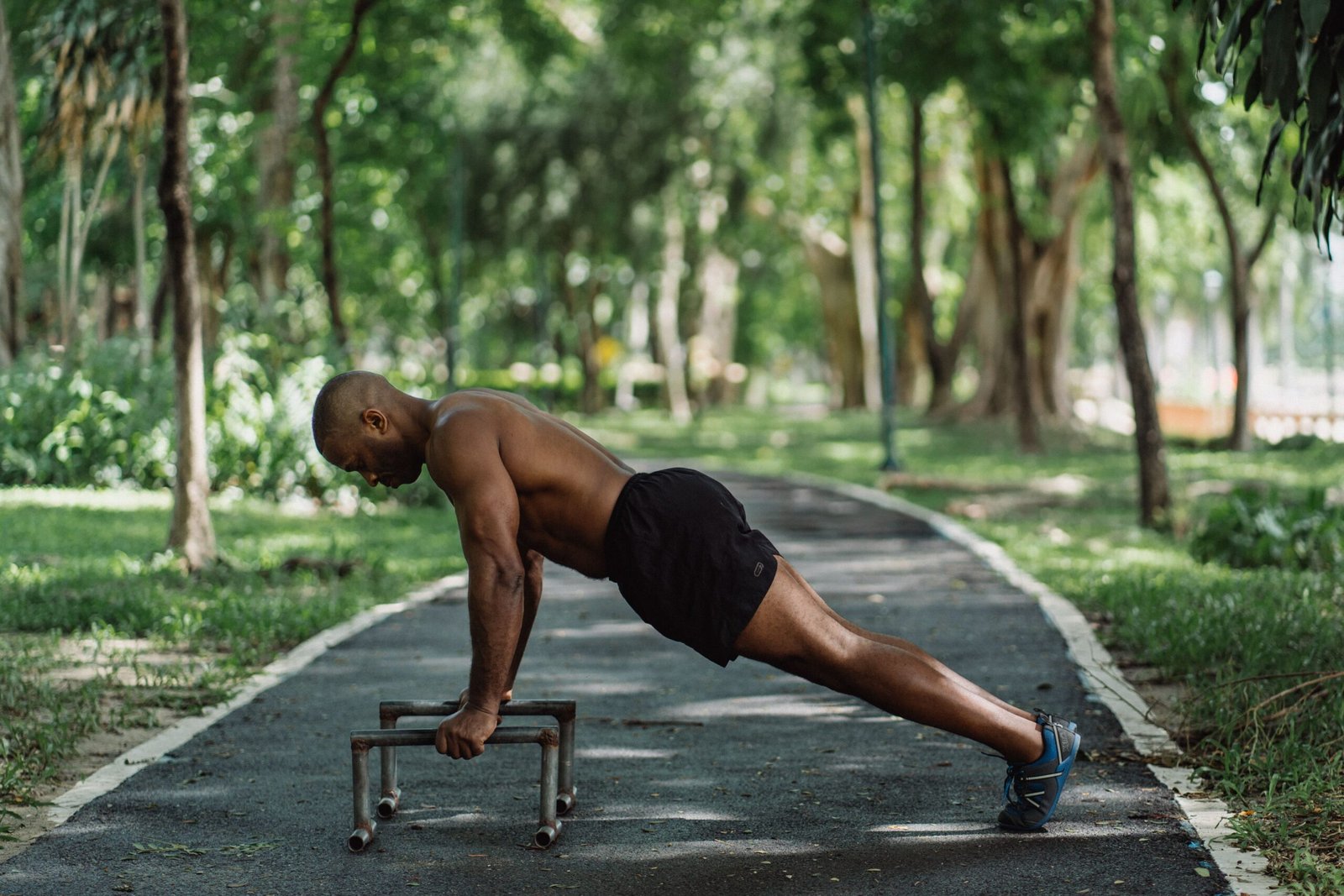
Parallettes are two small parallel bars that lift your hands a few inches off the floor — which sounds minor until you try an L-sit or a planche progression on flat ground and realize your wrists and shoulders don’t have anywhere to go. Parallettes fix that by keeping your wrists neutral and giving your legs room to lift.
Why we recommend them: A lot of beginner calisthenics goals — L-sits, planche progressions, deep push-ups — are genuinely harder and harder on your joints without parallettes. They’re inexpensive, take up almost no storage space, and unlock a big chunk of the calisthenics skill tree.
Pros:
-
- Protects wrists compared to flat-ground dips and push-ups
-
- Compact and lightweight — easy to store or travel with
-
- Low-profile design works for both core and pushing exercises
Cons:
-
- Low height limits some higher-skill dip progressions
-
- Wooden construction needs to be checked periodically for stability
-
- Not a substitute for a full dip station if dips are your main focus
Titan Fitness Freestanding Dip Station — best for structured dip & leg-raise training
Once dips and hanging leg raises become a regular part of your routine, a dedicated dip station is worth the upgrade from parallettes: wider, more stable handles, a taller working height, and — on this model — an adjustable frame that fits a range of heights and grip widths.
Why we recommend it: This is the piece we’d suggest adding once you’ve outgrown parallettes for dip work specifically. The adjustable height means it grows with you, and the freestanding design means it doesn’t require the wall or door-frame commitment a dip bar attachment does.
Pros:
-
- Wider, more stable base than parallettes for heavier dip work
-
- Adjustable height and grip width
-
- Doubles as a support station for leg raises and knee tucks
Cons:
-
- Largest footprint of anything on this list — needs dedicated floor space
-
- Higher price point than the other picks here
-
- Assembly required out of the box
Perfect Fitness Ab Carver Pro — best for core strength behind skill progressions
Front levers, planches, and even solid L-sits all come down to one thing beginners underestimate: anti-extension core strength — the ability to resist your lower back arching under load. An ab wheel is one of the most direct ways to train exactly that.
Why we recommend it: The built-in spring resistance on this one assists you back up to the starting position, which makes it meaningfully more beginner-friendly than a basic ab wheel — you get the same anti-extension training without needing advanced core strength just to complete a rep.
Pros:
-
- Spring-assisted return makes it accessible for true beginners
-
- Directly builds the core strength calisthenics skills depend on
-
- Compact, cheap, and needs zero setup
Cons:
-
- Wide wheelbase can feel less stable than narrower single-wheel models
-
- Spring assistance means less resistance than a standard ab wheel at more advanced levels
-
- Hard flooring or a mat is needed for comfort
CAP Barbell 20 lb Adjustable Weighted Vest — best for progressive overload on bodyweight moves
Bodyweight training has one built-in limitation: once push-ups or pull-ups start feeling easy, there’s no obvious way to make them harder — until you add external weight. A weighted vest solves exactly that problem without needing a full gym setup.
Why we recommend it: This is the calisthenics equivalent of adding plates to a bar. Once bodyweight squats, pull-ups, or dips stop being challenging, a weighted vest lets you keep progressing with the exact same movements instead of hunting for a harder variation.
Pros:
-
- Adjustable weight (up to 20 lbs) lets you add load gradually
-
- Works with almost every bodyweight exercise, not just one category
-
- Compact storage compared to a barbell-and-plate setup
Cons:
-
- 20 lbs is a ceiling more advanced lifters will eventually outgrow
-
- Can feel bulky or shift slightly during dynamic movements
-
- Less precise weight increments than adding a specific plate
What to Look for When Buying Calisthenics Equipment for Beginners
1. A pull-up bar comes first, always. Everything on this list assumes you already have a pull-up bar or suspension trainer — if you don’t yet, start with our beginner home gym equipment guide before adding any of the five picks above.
2. Buy for the skill you’re working toward, not the one you already have. Rings and parallettes both unlock genuinely new movements (ring rows, L-sits) rather than just making existing ones harder — prioritize equipment that opens a new category of training over gear that duplicates what you can already do.
3. Check your anchor point before buying rings or a suspension system. A sturdy door frame, ceiling beam, or dedicated wall mount is non-negotiable for rings — the same rule that applies to suspension trainers applies here.
4. Core equipment (like an ab wheel) is not optional if front lever or planche is a goal. A lot of beginners skip core-specific tools and wonder why skill progressions stall — anti-extension strength is usually the actual bottleneck, not upper-body pulling or pushing strength.
5. Add external load only once bodyweight versions feel genuinely easy. A weighted vest is a progression tool, not a starting point — jumping to added weight before mastering the unweighted movement is a common beginner mistake that increases injury risk for no real benefit.
Frequently Asked Questions
Do I need gymnastic rings if I already have a pull-up bar? They serve different purposes — a pull-up bar is fixed and best for pulling movements, while rings add instability that trains stabilizer muscles and unlocks ring-specific skills like ring rows and ring dips. They’re complementary, not redundant.
What’s the actual difference between parallettes and a dip station? Height and stability, mainly. Parallettes sit a few inches off the ground and work well for L-sits and lighter dip work; a dip station is taller, wider, and more stable for serious dip training and leg raises. Beginners often start with parallettes and add a dip station later.
Is an ab wheel safe for beginners? Yes, especially spring-assisted versions like the one above — the spring helps you return to the starting position, which reduces the risk of straining your lower back compared to a basic ab wheel used with poor form.
When should I add a weighted vest to my calisthenics equipment for beginners setup? Only once your unweighted reps of a given movement feel genuinely manageable — for most beginners, that’s a few months into consistent training, not week one. Adding weight too early is one of the most common calisthenics mistakes.
Can I build real strength with just these five items? Combined with a pull-up bar, yes — this covers pulling, pushing, core, and progressive overload, which is the actual skeleton of a calisthenics program. You won’t need much more until you’re chasing advanced skills like the front lever or planche.
Final Thoughts
Calisthenics equipment for beginners doesn’t need to be complicated or expensive — the five picks above (plus a pull-up bar, if you don’t already have one) cover the actual gaps that stop most people from progressing: instability training, wrist-friendly positioning, structured dip work, core strength, and a way to keep adding difficulty once bodyweight alone stops being enough.
Start with rings or parallettes if you’re picking just one — they unlock the most new movement options for the price. Add the rest as your training actually calls for them, not all at once.


Pingback: Best Yoga Mats for Home Practice - fithearth