
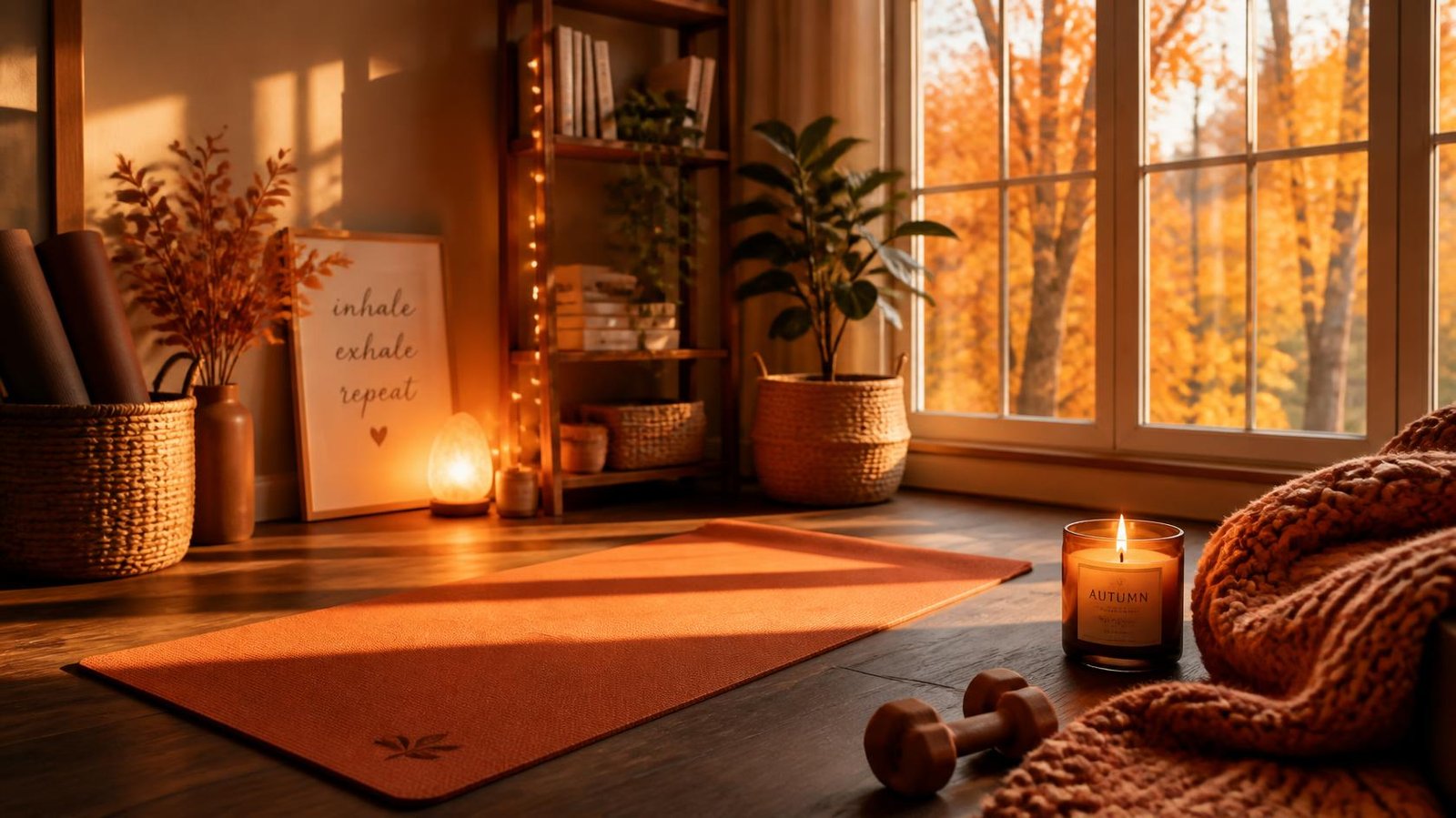
Most people set up their home gym wrong. Not because they buy the wrong equipment — but because they forget that a space you don’t want to be in is a space you’ll avoid.
We’ve seen it happen a hundred times: someone buys a good mat and a set of dumbbells, clears a corner of the bedroom, and three weeks later, the mat is rolled up under the bed and the dumbbells are holding the door open. It’s not a motivation problem. It’s an environment problem.
The spaces that actually get used look like somewhere you’d want to spend time — even on the days you don’t feel like moving. Here are twelve ideas to help you build one of those spaces.
1. Start With the Light
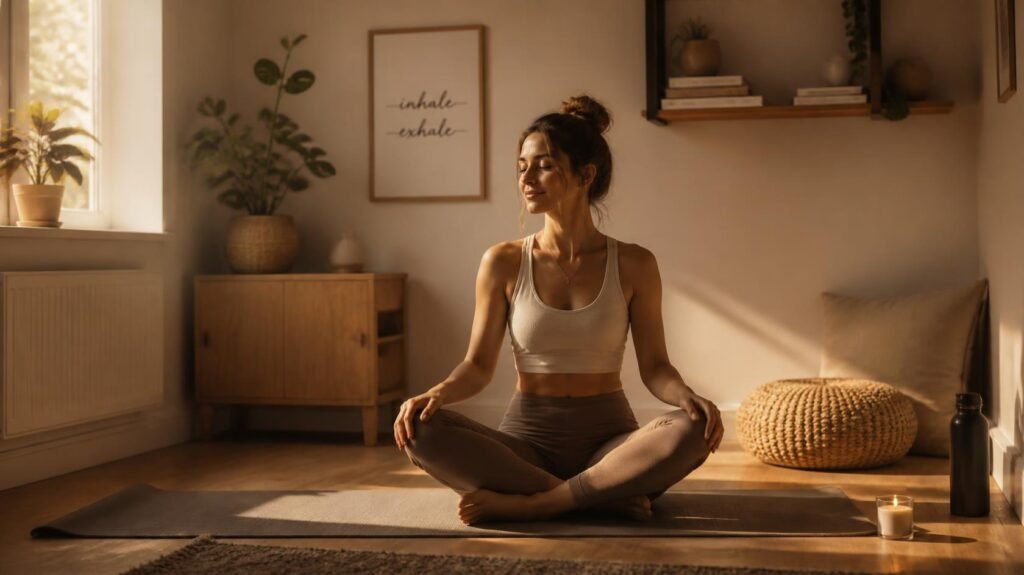
Lighting changes everything, and it costs almost nothing to get right. A room with harsh overhead lighting feels clinical. The same room with warm, layered light feels like somewhere you’d actually want to stretch out and breathe.
If you have natural light, use it. Position your mat or workout area to face or be near a window. Morning light in particular has an almost magical quality — it makes even a 6am movement session feel less like a sacrifice and more like a gift to yourself.
In the evenings or in rooms without good natural light, add a warm lamp. A simple floor lamp with a bulb around 2700K (warm white, not cool white) transforms the atmosphere completely. Avoid turning on bright ceiling lights during yoga or stretching sessions — it kills the mood instantly.
Quick tip: Use a smart bulb on a timer to have your workout space warm and lit before you even get out of bed. That small act of preparation makes showing up feel effortless.
2. Invest in Your Floor
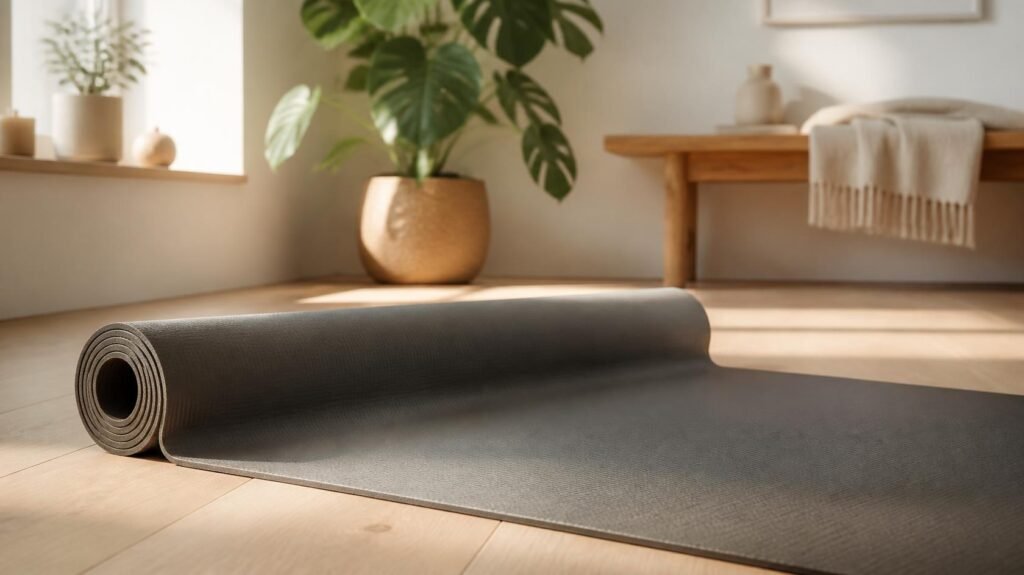
The floor is the foundation of your whole setup — literally. If it’s cold concrete or slippery laminate, your body knows. If it’s warm wood, cork, or a thick mat, your body relaxes into it.
You don’t need to renovate. Start with what’s already there and build on top of it. A thick, high-quality yoga mat makes more difference than most people expect — especially for morning sessions when your joints are stiff and your knees haven’t forgiven you yet.
If you want to go further, interlocking foam tiles are an affordable option that covers more floor space, absorbs impact, and actually makes your space look intentional rather than improvised.
Where the money goes: A good mat is worth buying once and keeping for years. [Find one that suits your practice here →]
3. Add a Mirror
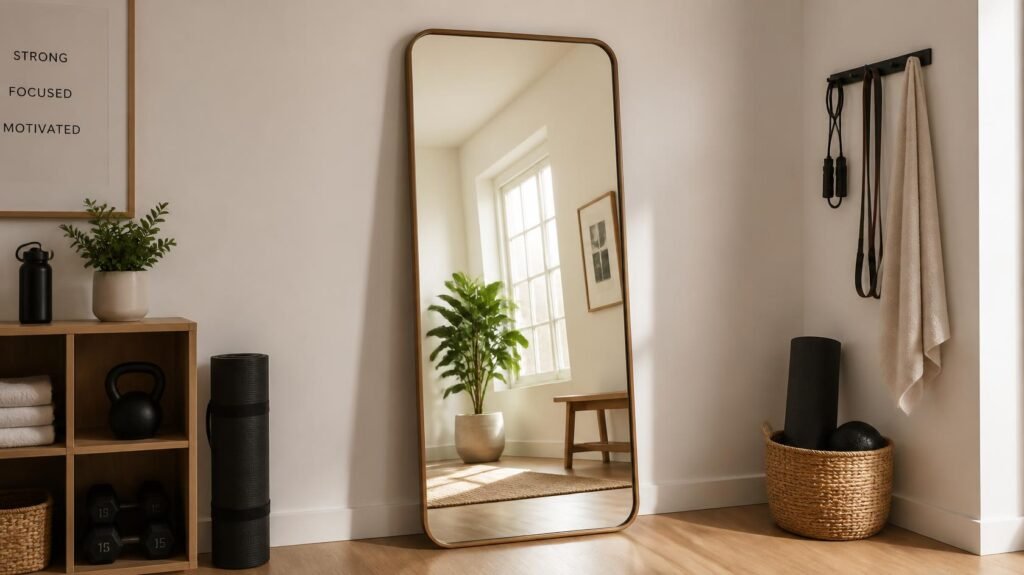
A mirror does two things: it makes the space feel larger, and it lets you check your form without needing to film yourself constantly.
You don’t need a floor-to-ceiling gym mirror. A single full-length mirror leaning against a wall is enough — and it looks intentional, not clinical. Lean it rather than mount it, and you can move it if you need the space for something else.
The aesthetic bonus: a mirror in a warm, lit room catches the light beautifully. Your workout corner will photograph well, which sounds trivial but actually makes you more likely to want to be in it.
✓ Worth it: Full-length mirrors from IKEA, Jysk or similar are inexpensive and work perfectly. You don’t need anything fancy.
4. Bring in Something Living
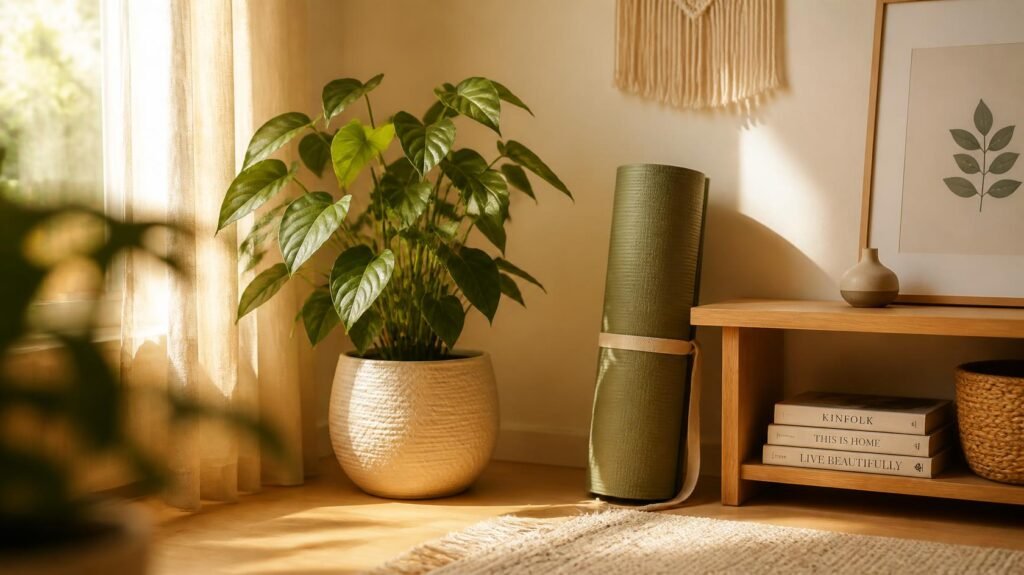
Plants change how a room feels. There’s actual research behind this — greenery reduces stress and improves focus — but you don’t need science to tell you that a corner with a plant in it feels more like somewhere you’d want to sit than a corner without one.
Low-maintenance plants work best in workout spaces because you’re going to sweat on them occasionally and forget to water them sometimes. Snake plants, pothos, and ZZ plants are all nearly impossible to kill and look genuinely good in a fitness corner.
One plant is enough. Start with one.
5. Get Your Storage Right
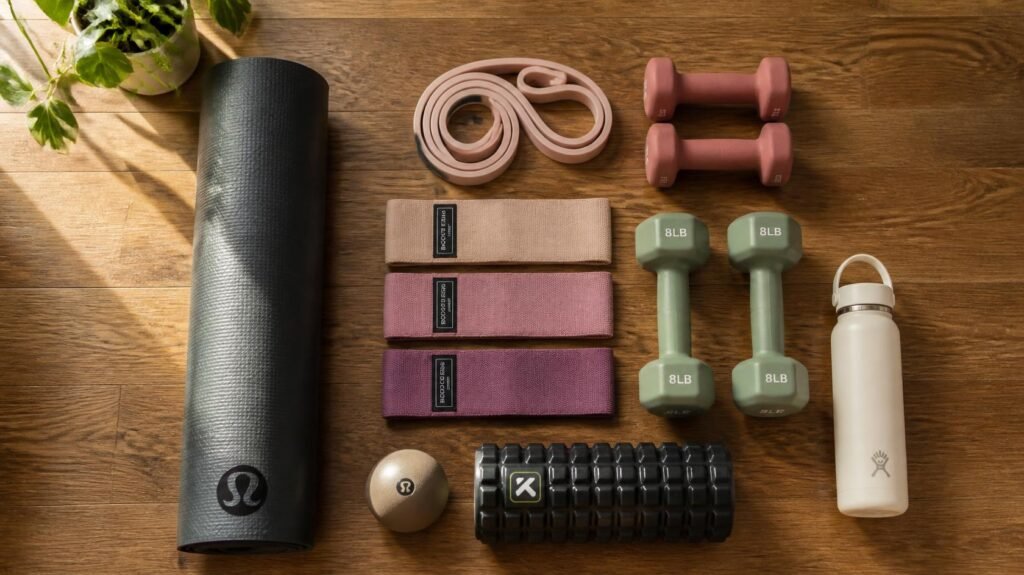
Nothing kills the mood of a workout space faster than clutter. If your mat is buried under a pile of other stuff, you’ll unconsciously avoid dealing with it. If your bands are tangled in a drawer, you won’t use them.
Simple, visible storage is the answer. A small basket for bands and smaller accessories. A set of low shelves or a rack for heavier items. The goal isn’t perfection — it’s making it easy to grab what you need in under ten seconds.
Wall hooks are underrated for workout spaces. A couple of hooks for your mat, a jump rope, and a resistance band takes up almost no space and keeps everything accessible.
✗ Skip this: Fancy multi-unit gym storage systems. A $15 basket and a few wall hooks do the job for most beginners and take up a fraction of the space.
6. Create a Dedicated Corner
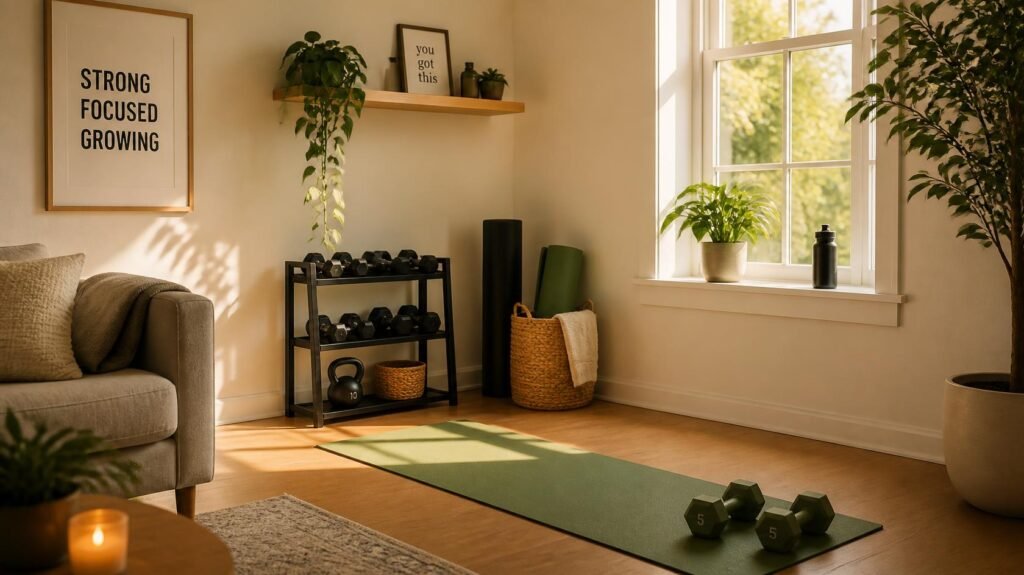
You don’t need a dedicated room. You need a dedicated feeling.
Pick a corner — any corner — and make it the workout corner. Roll out your mat there. Put your one or two pieces of equipment there. Add your lamp, your plant, your mirror. That’s it. That corner is now your gym.
The psychological impact of having a designated space is significant. When you walk into that corner, your brain starts to understand what’s happening. The transition from “being at home” to “working out” becomes easier because the space is doing half the work.
7. Start With Resistance Bands
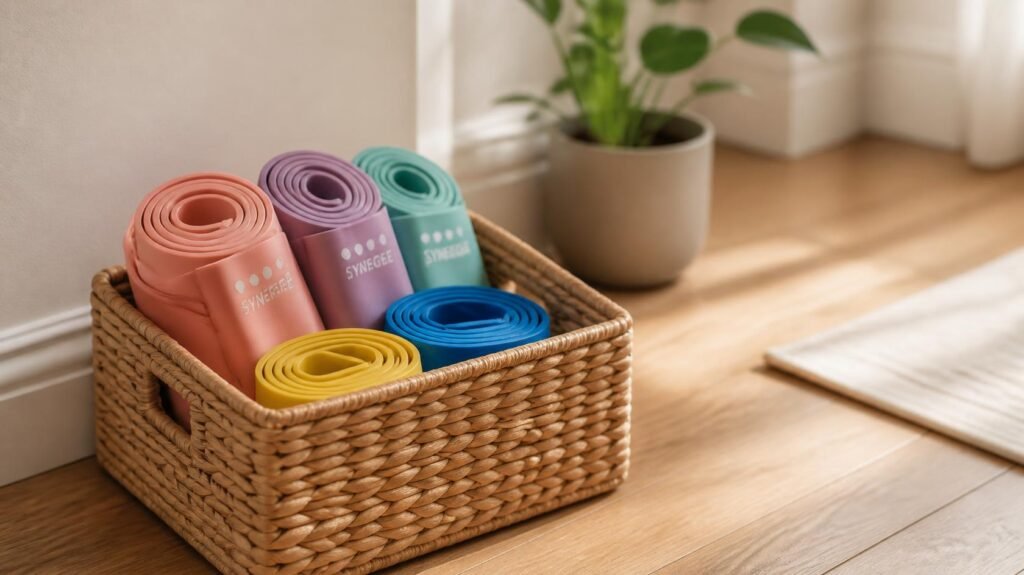
For pure versatility per square centimetre, nothing beats resistance bands. They take up almost no space, cost very little, and can challenge your body in more ways than most gym machines.
A basic set covers everything from glute activation and upper body work to full resistance training for beginners. They’re also genuinely aesthetic — a small basket of bands looks intentional in a way a pile of random equipment doesn’t.
If you’re starting from scratch, bands are the first piece of equipment worth buying. [Find the right set for your level here →]
8. Set the Mood Before You Start
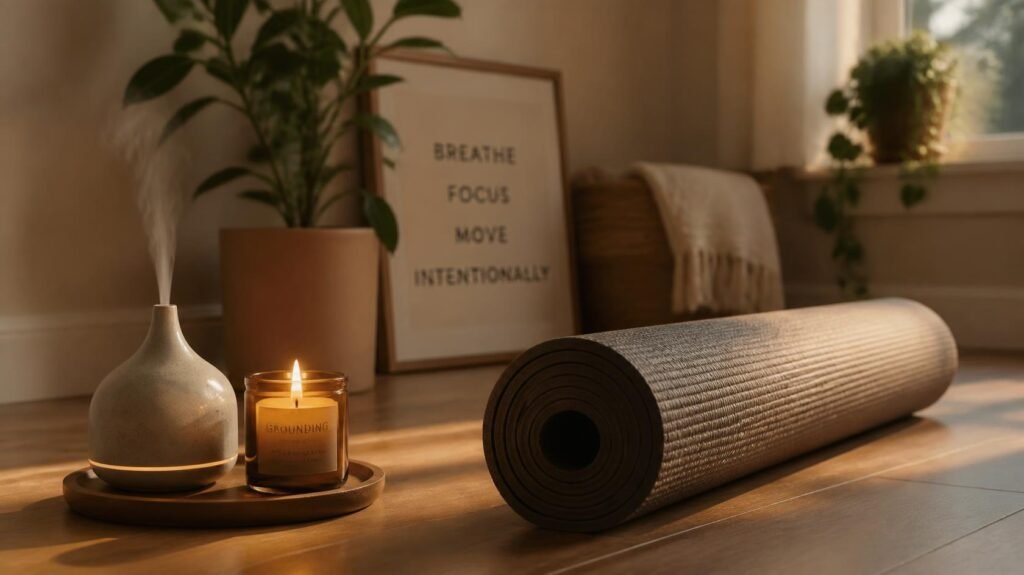
The ritual before the workout matters as much as the workout itself.
Give yourself two minutes before you start moving. Light a candle if that’s your thing. Put on the playlist that doesn’t feel like punishment. Roll out your mat. Take three slow breaths. This isn’t wasted time — it’s the transition that makes the whole session feel different.
A diffuser with eucalyptus or peppermint is a small investment that changes how your workout space smells (and therefore feels). It sounds trivial until you try it.
✓ Worth it: A simple essential oil diffuser costs very little and makes your workout space feel like a place rather than just a floor with a mat on it.
9. Consider a Foam Roller
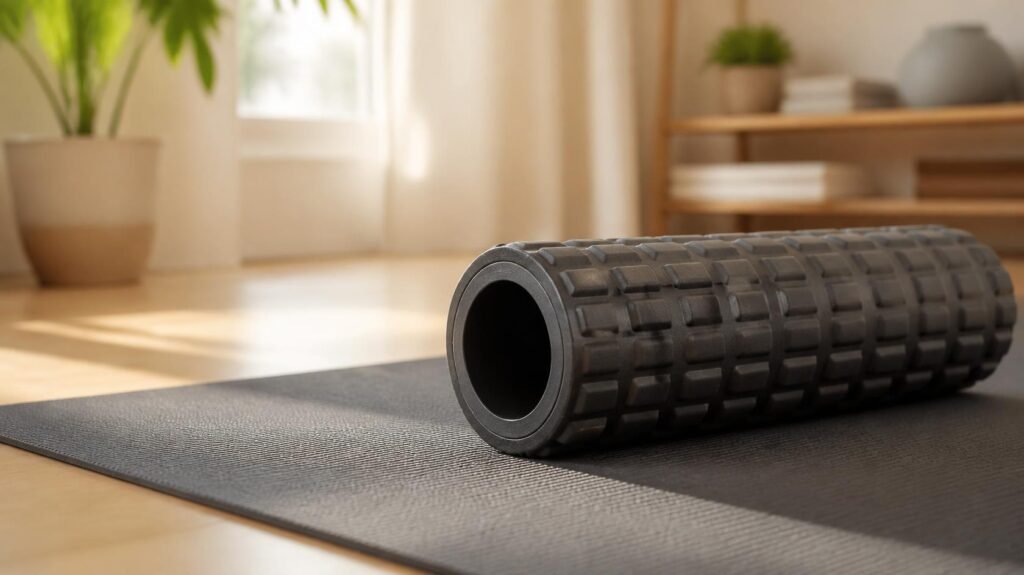
A foam roller is the thing most beginners skip and every experienced person wishes they’d started with sooner.
Five minutes of rolling before or after a workout — calves, hamstrings, upper back — makes a measurable difference in how your body feels the next day. For anyone who sits at a desk or works on their feet, this is genuinely one of the most effective recovery tools available.
It also doubles as something to do on the days you don’t feel like a full workout. Sometimes all you need is ten minutes on the floor with a roller and some music, and you’ll feel better than before you started.
[Find a good foam roller here →]
10. Add Adjustable Dumbbells
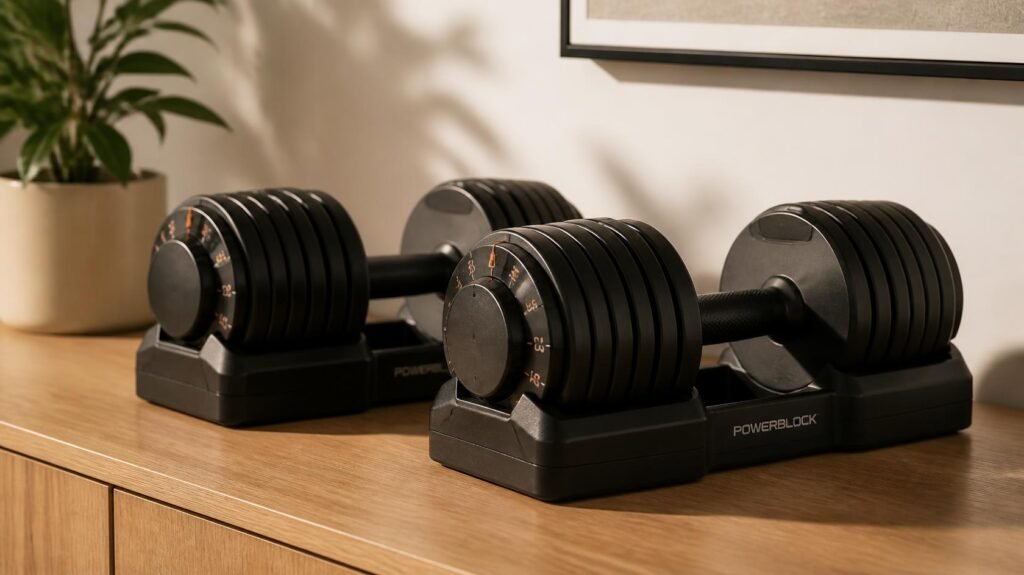
Once you’ve been training for a few weeks and want to add more resistance, adjustable dumbbells are the smart upgrade. They replace an entire rack of fixed weights, take up the footprint of one pair, and look genuinely good in a home gym corner.
They’re not cheap — but they’re one of those purchases that pays for itself quickly when you consider what a full set of fixed dumbbells would cost and the space they’d take up.
[See adjustable dumbbell options here →]
11. Think About Sound
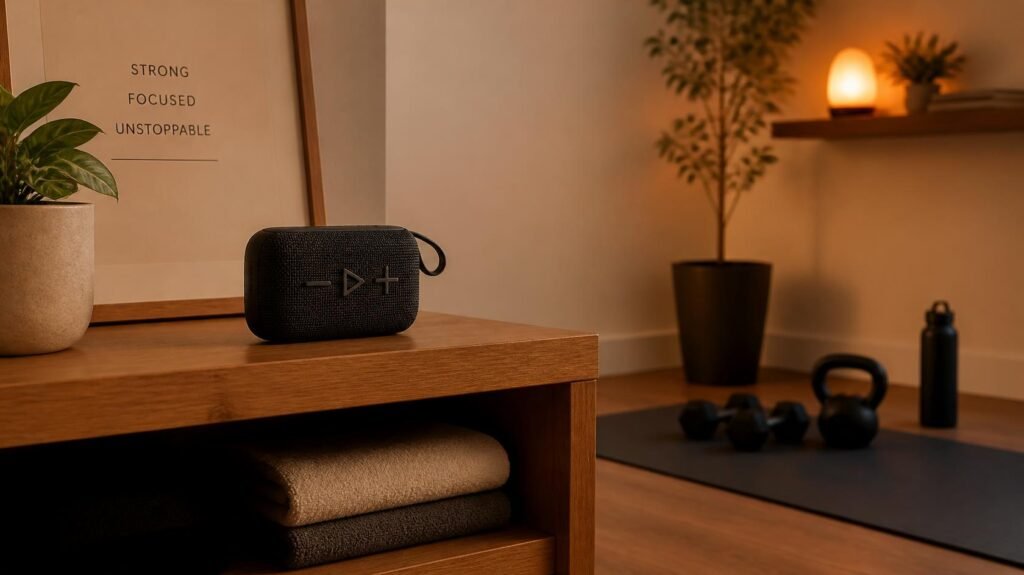
Sound shapes your experience more than almost any other environmental factor. Earbuds work fine, but a small speaker in your workout corner changes the energy of the space — music fills the room rather than just your head.
You don’t need anything expensive. A small Bluetooth speaker on a shelf is enough. The important thing is having music (or a podcast, or silence, depending on the session) ready to go without friction.
12. Add a Seasonal Touch
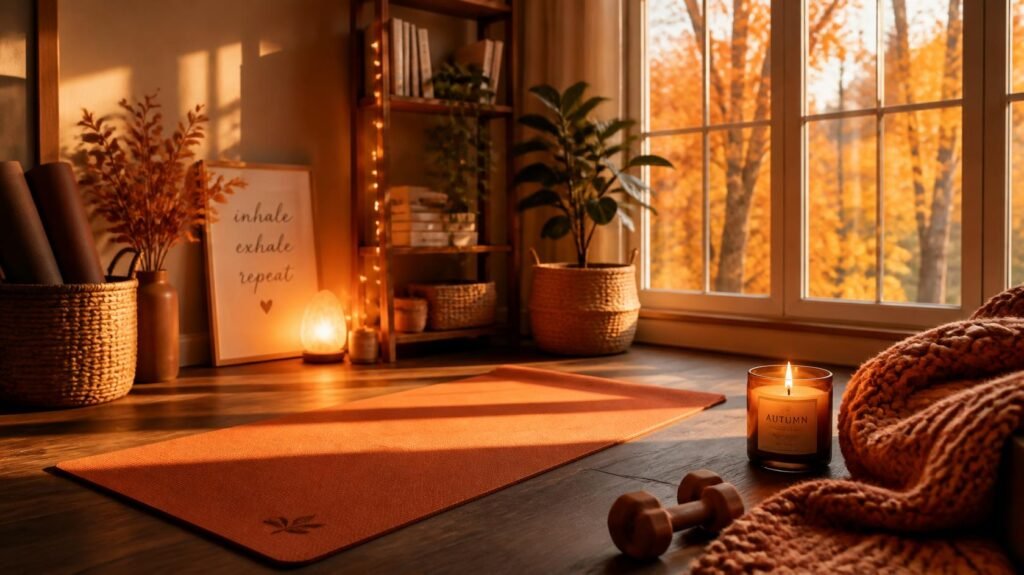
Your workout space doesn’t have to look the same year-round. Autumn is a perfect time to lean into the cozy: a warm-toned blanket folded over a corner chair for post-workout cool-down, a candle in amber or sandalwood, softer lighting.
These small seasonal touches make your space feel lived-in and intentional — not like a gym you happen to have in your house, but like a room that belongs to you and changes with the seasons.
It’s a small thing. But small things add up to a space that feels like somewhere you choose to be.
Final Thoughts
The best home gym is the one that makes you actually show up. Not the most expensive, not the biggest, not the most Instagram-worthy — the one that feels good to be in.
Start with one corner, one good mat, and decent lighting. Add the rest gradually, as you figure out what your body actually needs. Your space will grow with your practice — and that’s exactly how it should be.
Looking for gear to get started? Check out our guide to The Best Home Gym Equipment for Beginners — everything you need, nothing you don’t.

Pingback: Small Space Home Gym: Everything You Need for Under $200
Pingback: Why You Keep Quitting Your Home Gym (And How to Actually Stick With It) - fithearth